
Shaping national dietary guidance to prevent hypertension in Japan
Hypertension affects tens of millions of people in Japan, making effective dietary prevention a national public health priority
In 2016, researchers from the NIPPON DATA Research Group published a BMJ Open study, ‘Dietary sodium-to-potassium ratio as a risk factor for stroke, cardiovascular disease and all-cause mortality in Japan: the NIPPON DATA80 cohort study’, showing that the dietary sodium-to-potassium ratio, rather than sodium intake alone, was a significant predictor of mortality from stroke, cardiovascular disease, and all causes over 24 years.
Nearly a decade later, the research remains highly relevant, having recently helped to reframe national guidance on hypertension prevention in Japan. As a result of the BMJ Open paper, instead of focusing only on salt reduction, Japanese guidance now emphasises reducing the sodium-to-potassium ratio and using urinary sodium-to-potassium ratio assessment to support hypertension risk management.
In recent years, the paper contributed to the evidence base for the Japanese Society of Hypertension 2024 Consensus Statement on urinary sodium-to-potassium ratio and the 2025 Japanese Society of Hypertension Guidelines for the management of elevated blood pressure and hypertension.
It was also cited alongside two landmark BMJ papers¹, ² on sodium and blood pressure in the 2026 Japanese Society of Hypertension Guidelines for Blood Pressure Control Using Digital Technologies, demonstrating the sustained contribution of BMJ Group evidence to national guidance on hypertension prevention and cardiovascular risk reduction.

“By this paper, potassium intake increase has been emphasised in addition to salt (sodium) reduction for the prevention of hypertension and cardiovascular diseases in Japan.”
Professor Katsuyuki Miura
Co-principal investigator of the NIPPON DATA Research Group; director and professor, NCD Epidemiology Research Center (NERC), Shiga University of Medical Science (SUMS), Seta-Tsukinowa-cho, Otsu, Shiga, Japan

“The importance of combining sodium reduction with increased potassium intake has received growing attention in Japan. We believe this more comprehensive dietary approach can help reduce cardiovascular risk across the Japanese population. We hope the continued reading and use of this BMJ Open paper will support disease prevention.”
Dr Akira Okayama
Lead author of the NIPPON DATA80 cohort study and researcher at the Research Institute of Strategy for Prevention, Tokyo, Japan
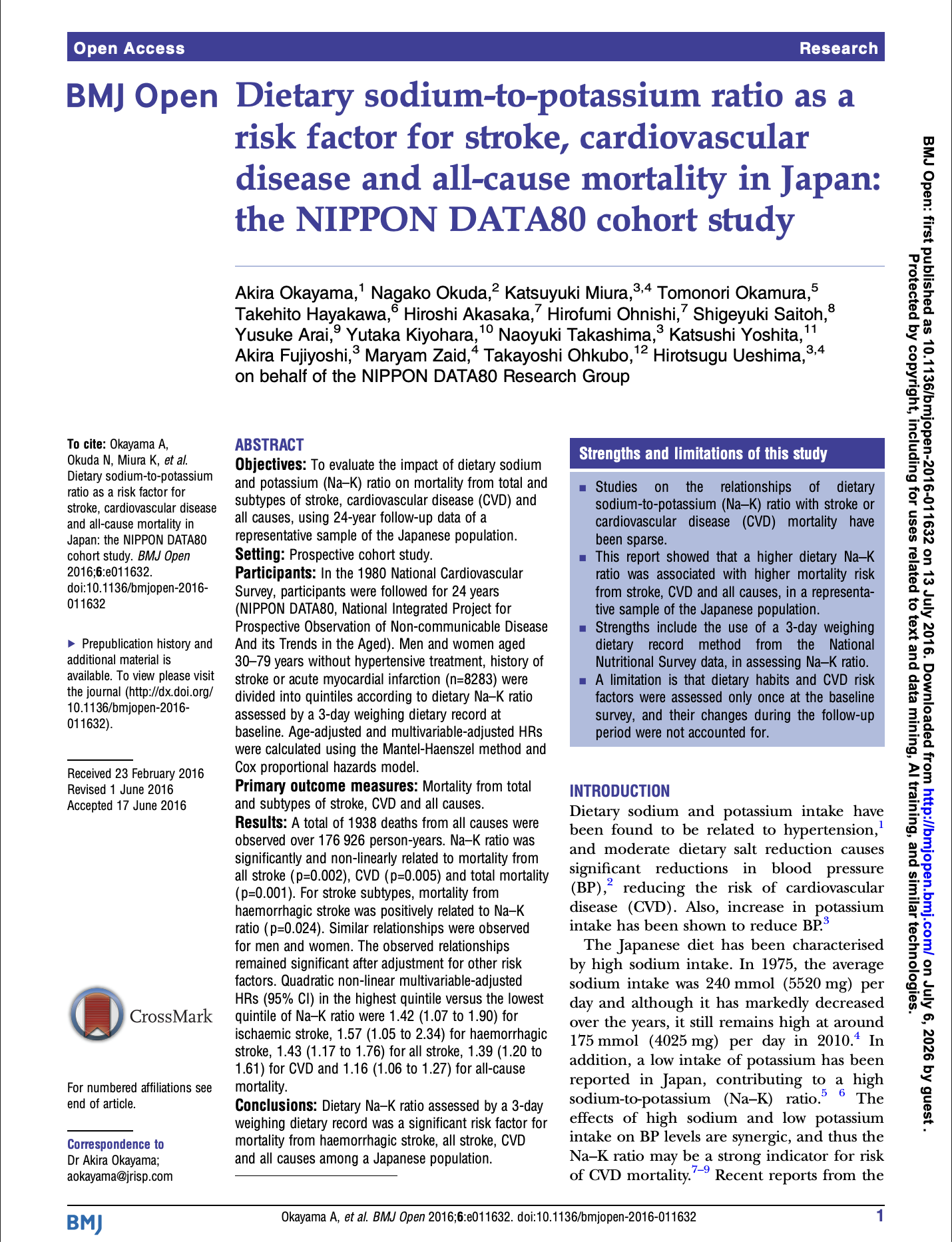
BMJ Impact Analytics shows that this influence extends across policy and clinical guidance. The paper is linked to 29 policy and guidance documents across two countries, including 28 from the Government of Japan. The topics most strongly associated with these documents include potassium, hypertension, salt, health, diabetes, pregnancy, body weight, breastfeeding, lifestyle disease, and medical specialties, showing that the research has informed a broad prevention agenda.

Real voices, real change

Research from East Africa helps shape the future of global HIV care

Stroke studies from China shape global guidance
The diet that rewrote the rules on type 2 diabetes remission
Setting the international standard for lupus remission

Shaping national dietary guidance to prevent hypertension in Japan

Helping clinicians manage one of immunotherapy’s most serious risks

Beyond survival: Shaping the first roadmap for post-Covid rehabilitation

How Ugandan research shaped covid-19 treatment

From systematic reviews to global guidance

Championing the rights and health of street and working children

How evidence based policy can drive meaningful change

‘Renaissance era’ diagnosis of scurvy in today’s bariatric population

Raising awareness of a rare but serious risk linked to menstrual cup use

Stimulating international research dialogue on SGLT2 inhibitors and immune risk

Innovative device tackles racial bias in health monitoring, ensuring accurate readings for all skin tones

Revealing the hidden risks of slush ice drinks in children