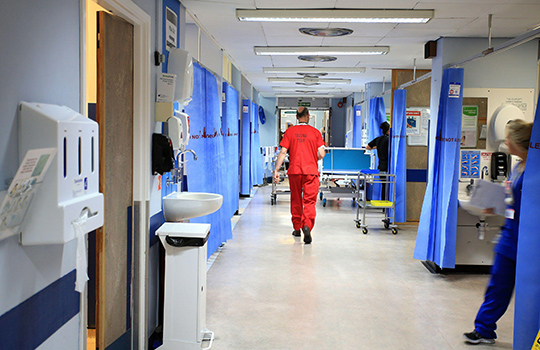
Many trusts breaching guidelines by treating specific patient groups in corridors
Experts call findings shocking and warn the problem is getting worse
Exclusive data published by The BMJ today reveal that half of hospital trusts in England are breaching NHS corridor care guidelines by treating vulnerable groups in emergency department corridors, including children, mental health patients and those with physical and learning disabilities.
A total of 41 out of 73 trusts (56%) say certain high-risk patients have been placed on A&E corridors during 2026 even though NHS England has stipulated that the practice “must be avoided” for these groups.
This includes 10 trusts (14%) who have put children on emergency department corridors of which one confirmed these patients were aged 15 or under, Freedom of Information requests show.
Last month, health and social care secretary Yvette Cooper promised to “eliminate” corridor care for children. She said the government would start collecting data on the number of children treated on corridors, and she has also asked NHS England to draw up “urgent new standards” for how children should be treated in A&E.
But experts say they are particularly concerned about children being placed in corridors in case staff miss rapid deteriorations in their health, as well as potential safeguarding issues.
The investigation comes as a Royal College of Emergency Medicine survey suggested that 1 in 5 patients – including those in mental health crisis and children – experienced corridor care in early November. Vice president Russell Duncan said: “The scale of the problem with corridor care is so great that it simply isn’t possible to protect a specific group.”
King’s Fund senior analyst Danielle Jefferies added: “Overall it’s a very shocking finding. Unfortunately, it’s not surprising given how prolific corridor care is across the NHS at the moment.”
Of the ten trusts who have put children in corridors, North West Anglia Hospitals said patients aged 15 or under had been placed on corridors four times since 1 January 2026.
Hull University Teaching Hospitals, North Cheshire and Mersey, Royal Cornwall Hospitals and University Hospitals North Midlands said the youngest patients to be placed on emergency department corridors were 16, while United Lincolnshire Teaching Hospitals said the youngest was 17. The Wrightington, Wigan and Leigh Teaching Hospitals said children in corridors were all over 16.
Three other trusts – Surrey and Sussex, University Hospitals of Morecambe Bay and The Newcastle Upon Tyne Hospitals – could not confirm the ages of the youngest child seen in corridors.
Commenting on the data, Ronny Cheung of the Royal College of Paediatrics and Child Health said corridor care for children is now “increasingly commonplace” and placing children outside normal clinical areas “poses a potential risk.”
Other experts are concerned about the winter months ahead as NHS figures show an average of 2,718 patients a day were treated in emergency department corridors in October. Published since June, these figures have remained broadly at the same level during summer, but are likely to increase over winter.
An NHS spokesperson said, “Caring for any patient in a corridor is never an acceptable situation, especially when those patients are some of our most vulnerable, so we are determined to tackle and end corridor care.
“This is why we are supporting the hospitals who have the biggest challenges with corridor care, and providing patients and their families with more ways than ever before to get the care they need either at home or in the community, away from busy A&Es.”
18/11/2026
Notes for editors
News: Corridor care crisis: Over half of NHS hospitals putting vulnerable patients in public areas doi: 10.1136/bmj-2026-101441

First published in 1840, The BMJ currently ranks among the world’s top five general medical research journals.
The post Over half of NHS hospitals putting vulnerable patients in public areas first appeared on BMJ Group.