Associated with saving 5 more lives than expected out of every 100 seriously injured people
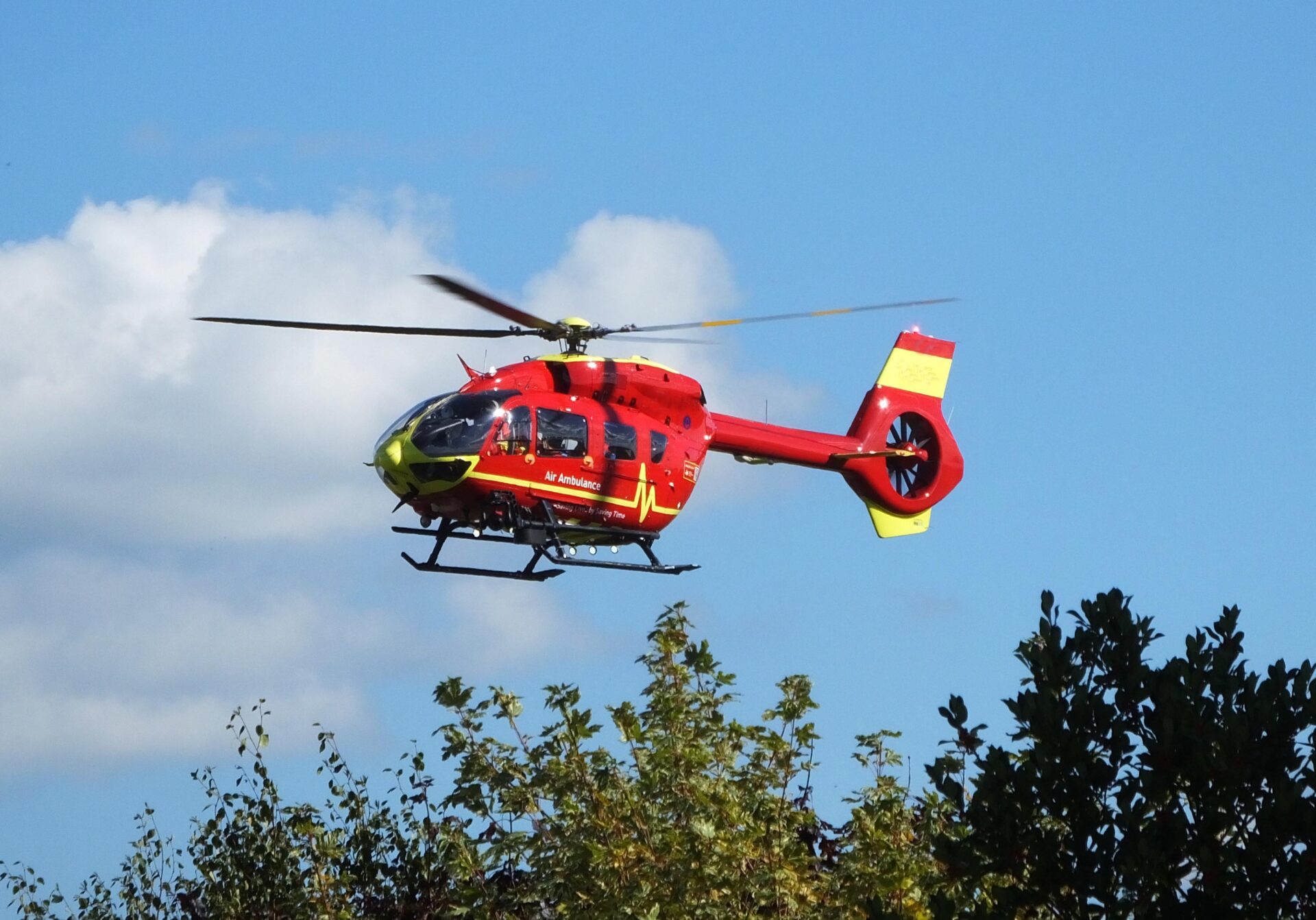
Air ambulance pre-hospital care (HEMS) may make surviving critical injury more likely as it’s associated with saving 5 more lives than would be expected in every 100 major trauma cases, suggests an analysis of survival data for one regional service in South East England, and published online in Emergency Medicine Journal.
International evidence for the impact on survival of Helicopter Emergency Medical Services (HEMS) in major trauma has been hampered by methodological differences, inadequate sample sizes, and no agreed definitions of outcome, explain the researchers. And it’s not clear which patients might benefit the most from these services.
To find out, the researchers retrospectively analysed the outcomes of 3225 trauma patients in receipt of pre-hospital care from one HEMS team covering Kent, Surrey, and Sussex between 2013 and 2022.
They applied a statistical technique to identify the probability of survival (Ws analysis) adjusting for case-mix, and predictors of death within 30 days.
They also looked at unexpected predictors of survival and resumption of heartbeat (return of spontaneous circulation) rates in traumatic cardiac arrest—when the heart stops beating after severe injury, such as major bleeding or chest trauma.
In all, 2125 patients exceeded 30 day survival following the incident (85% vs expected 81%), equivalent to 5 extra survivors in every 100 patients, adding up to as many as 115 additional lives saved each year, based on the average number of trauma patients attended by the service.
Those patients most likely to benefit were those who were severely injured with a moderate (25-45%) probability of survival: 35% of them unexpectedly survived for 30 days.
And among patients whose probability of survival was low (less than 50%), because of the extent of their injuries, 39% unexpectedly survived.
Key predictors of unexpected survival were younger age and higher initial Glasgow Coma Scale—a 3 to 15 point score used to assess level of consciousness after a brain injury.
Pre-hospital emergency anaesthesia, which puts a trauma patient into an induced coma, and can only be performed by advanced care teams, such as HEMS, was independently associated with unexpected survival in this group.
Among 1316 patients in traumatic cardiac arrest, 356 (27%) sustained return of spontaneous circulation while en route to hospital and 960 patients were pronounced dead at the scene.
Of the 356 still alive, 30 day survival data were available for 185 (52%) of them: 46 (25%) were still alive after 30 days;139 died in hospital. The probability of the resumption of spontaneous circulation increased 6% year on year between 2013 and 2022, the analysis indicated.
The researchers caution that their estimates represent excess survival compared with modelled predictions, rather than a causal effect of HEMS, and they assume consistent performance and case-mix over time, which may not always happen.
Nevertheless, they say their findings illustrate “the potential magnitude of clinical benefit, consistent with previous economic and social benefits demonstrated in previous studies.”
They conclude: “These findings provide supportive evidence for continued investment in HEMS, particularly for severely injured patients, though comparative studies with alternative care pathways are needed to establish causal effectiveness.”
03/02/2026
Notes for editors
Research: Helicopter Emergency Medical Services attendance is associated with favourable survival outcomes in major trauma: derivation and internal validation of prediction models in a regional trauma system Doi:10.1136/emermed-2025-
Journal: Emergency Medicine Journal
About the journal
Emergency Medicine Journal is one of 70 journals published by BMJ Group. The title is co-owned with the Royal College of Emergency Medicine
https://emj.bmj.com/
Link to Academy of Medical Sciences press release labelling system
http://press.psprings.co.uk/
Externally peer reviewed? Yes
Evidence type: Data analysis; Observational
Subjects: People
The post Air ambulance pre-hospital care may make surviving critical injury more likely first appeared on BMJ Group.