
Research from East Africa helps shape the future of global HIV care
A review of health policies across six East African countries has been cited by UNAIDS as it reshapes the global HIV response, contributing to the evidence on how HIV services can be integrated sustainably with wider health systems.
For decades, human immunodeficiency virus (HIV) programmes in many low and middle income countries have operated separately from wider health services. But as people living with HIV live longer and increasingly develop non-communicable diseases, integrating their care has become an important global health priority.
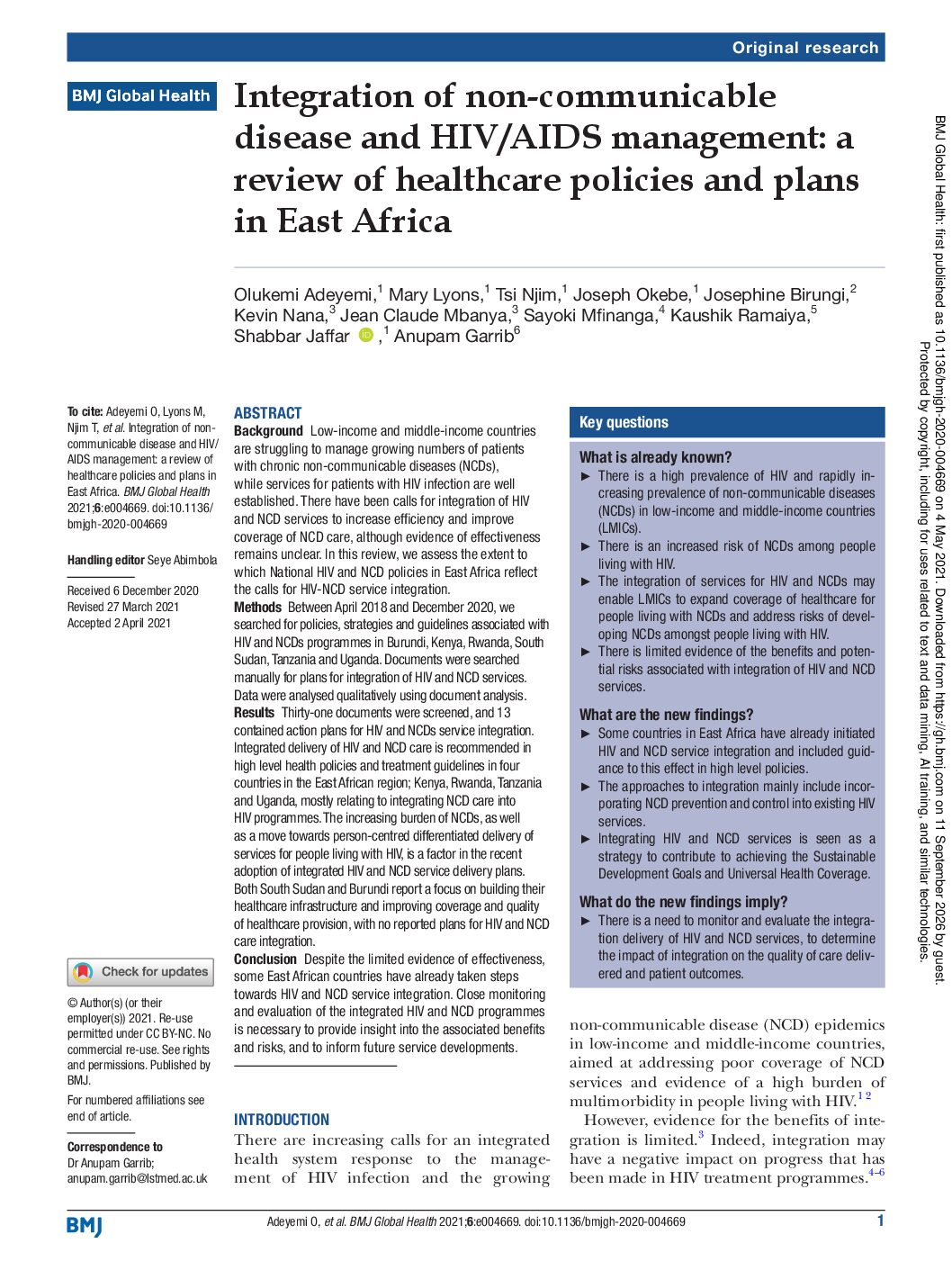
In 2021, BMJ Global Health published the paper, Integration of non-communicable disease and HIV/AIDS management: a review of healthcare policies and plans in East Africa. Looking at policies and plans across six East African countries, the authors found that HIV and non-communicable disease services were still not well integrated. They called for more joined-up care, with better monitoring and evaluation of how integration is working.
It can take years for research to influence policy. In 2025, UNAIDS cited the review in its flagship Global AIDS Update, as part of the evidence supporting more joined-up HIV and other health services. This has become more important as countries face cuts to international HIV funding and look for more sustainable ways to provide care.
Greater integration of HIV services with primary health care, wider health systems and other sectors is now embedded in the Global AIDS Strategy 2026–2031, which sets out 16 global targets for 2030.
In June 2026, UN Member States adopted a new Political Declaration on HIV/AIDS that includes all 16 targets. This brings the Strategy’s targets into a formal UN declaration agreed by Member States.

“BMJ Global Health is accessible with a reputation for high quality research. It’s a place that our colleagues go to. For research like this, you want it to also be accessible to the people who can actually use it. Being open access means policymakers and researchers in the countries we were studying can read and share the work without a subscription.”
Anupam (Anu) Garrib, Principal research associate, RESPOND-Africa Partnership, UK
Related papers
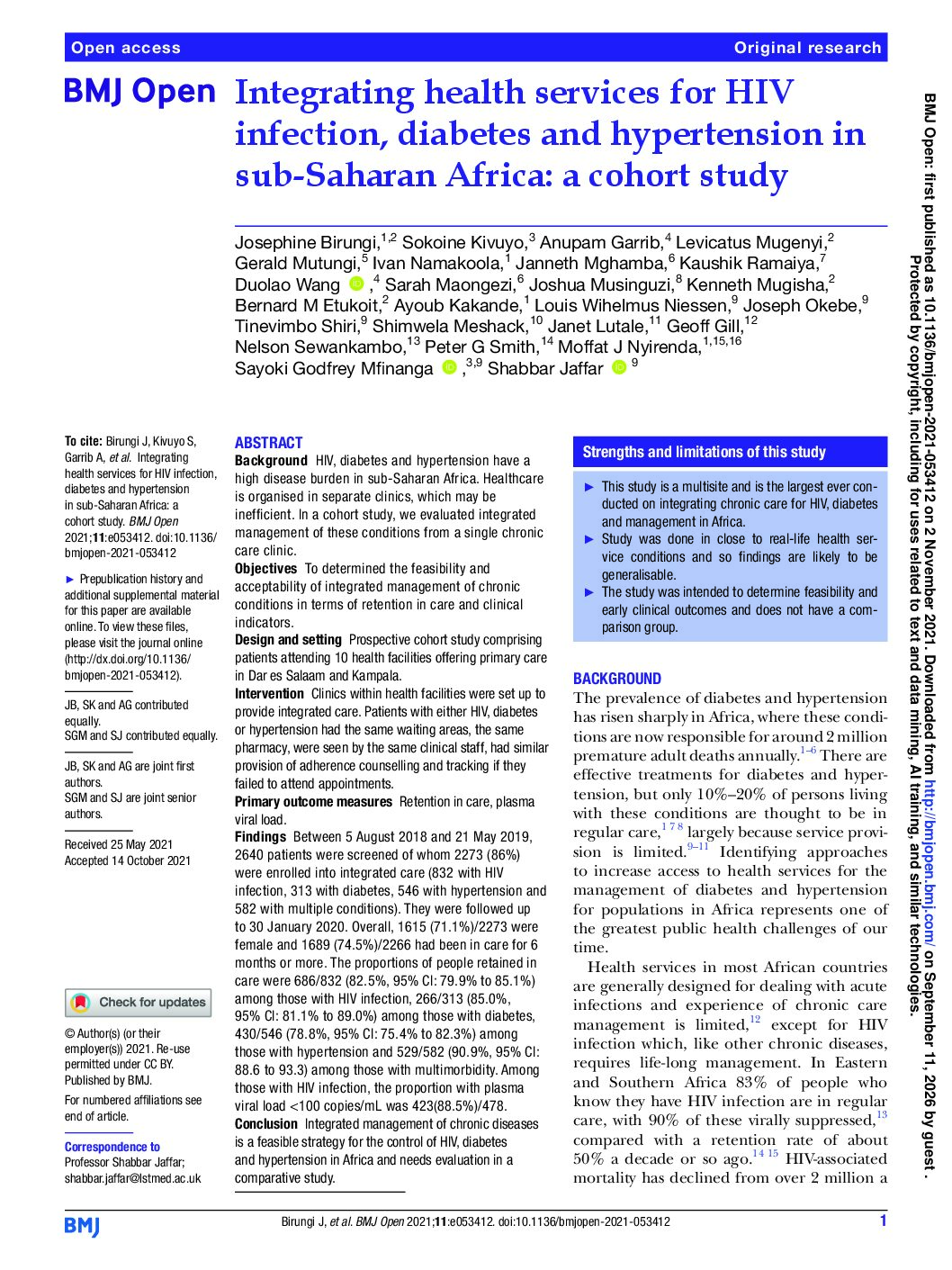
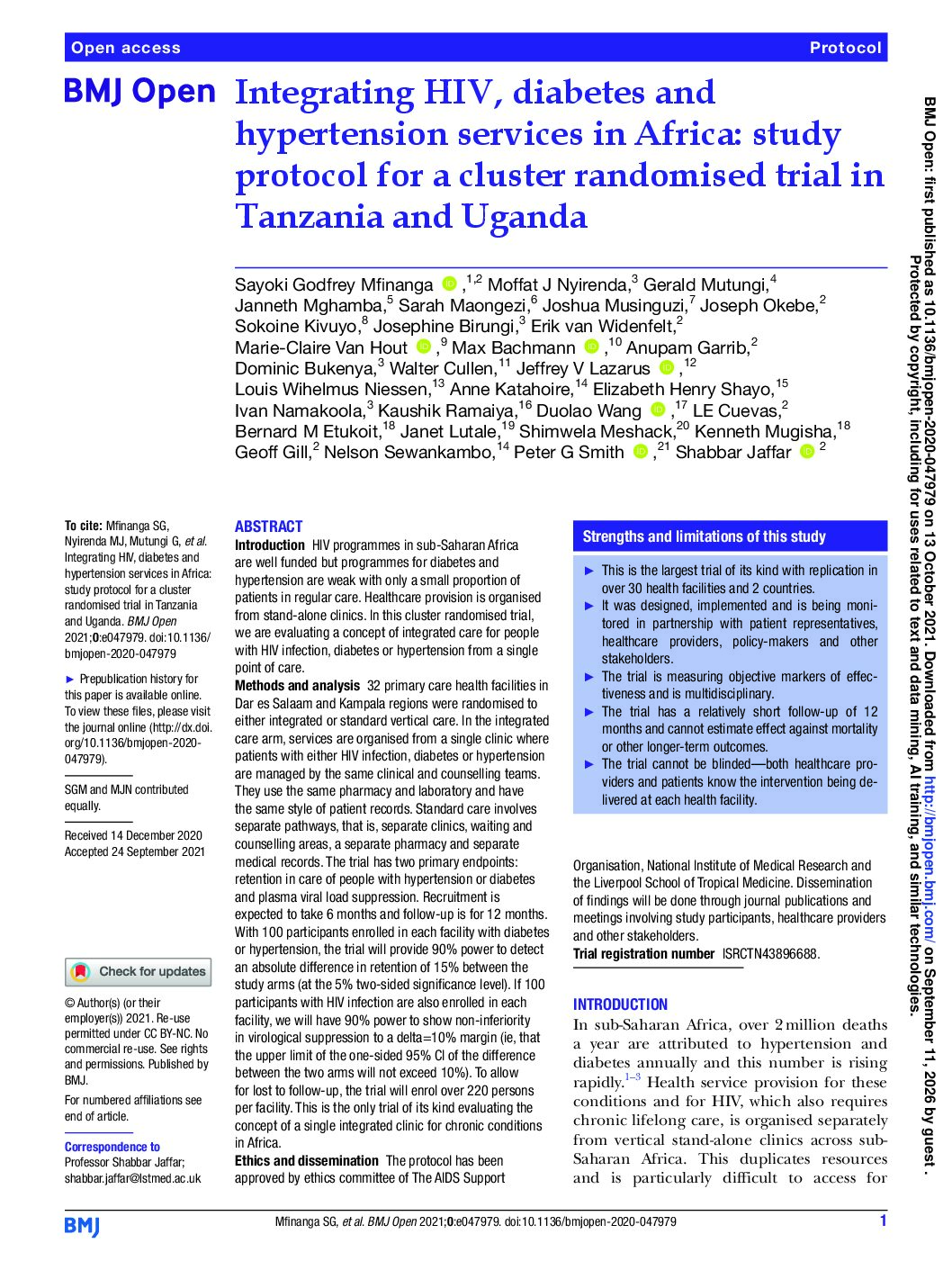
These two BMJ Open papers form part of the same programme of research exploring whether care for HIV, diabetes and hypertension can be brought together in a more integrated model. The protocol sets out the design of the cluster randomised trial in Tanzania and Uganda, while the related cohort study examines the feasibility of delivering integrated chronic care in practice. Together, they trace the work from study design through to implementation and evaluation.
“We used the model we developed in the feasibility study in a much larger cluster randomised trial, comparing facility-based integrated care with standard vertical care. It was the beginning of a stream of work.” Anupam (Anu) Garrib, Principal research associate, RESPOND-Africa Partnership, UK
BMJ Impact Analytics shows that the reach of the BMJ Open research extends beyond Tanzania, with citations in clinical guidance and health policy in both Tanzania and the USA.
The analysis identifies two policy or guidance documents across the two countries, with the research appearing in evidence relating to health, communicable disease, HIV/AIDS and medicine. It also shows links to institutions including Tanzania’s Ministry of Health and National Institute for Medical Research, as well as international academic and health organisations.
“Health systems are urgently trying to find ways to provide more with increasingly limited resources. I think this work is becoming more relevant as time goes on.” Anupam (Anu) Garrib, Principal research associate, RESPOND-Africa Partnership, UK
BMJ Global Health is an open access, online journal published by BMJ Group. It includes peer reviewed content relevant to those involved in global health, including policy makers, funders, researchers, clinicians and frontline healthcare workers.
Nearly 95% of low to middle income-originated research was published open access in early 2025, up from 56% in 2022.
Real voices, real change
Integration of non-communicable disease and HIVAIDS management a review of healthcare policies and plans in East Africa
Research from East Africa helps shape the future of global HIV care

Stroke studies from China shape global guidance

Diabetes Impact story banner
The diet that rewrote the rules on type 2 diabetes remission

Setting the international standard for lupus remission

Shaping national dietary guidance to prevent hypertension in Japan

Helping clinicians manage one of immunotherapy’s most serious risks

Beyond survival: Shaping the first roadmap for post-Covid rehabilitation

How Ugandan research shaped covid-19 treatment
From systematic reviews to global guidance
Championing the rights and health of street and working children

How evidence based policy can drive meaningful change

‘Renaissance era’ diagnosis of scurvy in today’s bariatric population

Raising awareness of a rare but serious risk linked to menstrual cup use

Stimulating international research dialogue on SGLT2 inhibitors and immune risk
Innovative device tackles racial bias in health monitoring, ensuring accurate readings for all skin tones

Revealing the hidden risks of slush ice drinks in children